Showing posts with label science. Show all posts

Tuesday, January 13, 2015

Rabbit Trails and Slime Mold

It wouldn't be homeschooling if we didn't head down a few rabbit trails!  This week we are continuing our cell and DNA studies, and after reading a bit about diatoms and spirogyra, we wanted to check out a few more members of the fascinating Protist family.


We began by reading this book by Rona Arato.  It's a good introduction to Protists with lots of great photos and cool info about this odd group of organisms.  The kids like this series of nonfiction because it's written for a young reader but, as Dude says, "They don't talk to you like you're a baby."


I have to admit, we got a serious case of the giggles when we got to this page!  We have four dogs and have seen our share of, uh, slime mold, over the years!


Then it was time to get out the microscope and look at some protists.  Super took these amazing microscope photos.


Amoeba, reaching with their pseudopodia...


 ...Paramecia, dyed with such festive colors...


...and delicate, confetti-like Diatoms.

We learned that malaria and African sleeping sickness are caused by protozoa (which are in the Protist family) and that when you use chalk, you are writing with the crushed silica shells of ancient diatoms.  We read about the dinoflagellates that cause red tides, and about how important Protists are in the food chain.

Finally, we watched this very thought-provoking video:


Hope you're having a great week learning with your family!


Wednesday, December 31, 2014

More cell study...


I think I have mentioned this video before, but we watched it again today and it just amazes me every time!  


Tuesday, December 30, 2014

Thinkwell Biology Review and Cell Activites


We are really enjoying our Thinkwell AP Biology course, but we are moving at a much slower pace than I had anticipated.  This is partially because we keep going down rabbit holes and discussing side topics and doing supplemental reading...and partially because there is just so much information to cover.  

It's December and we have just finally finished Unit One, so we will definitely be extending our subscription!


The lectures are great because the instructor takes big topics and breaks them down into manageable pieces (about 10 or 15 minutes instead of a typical hour-long college lecture.)  We never watch more than one video a day because we like to discuss the video, go over the course notes, and delve into supplemental information.  

My only criticism is that the video quizzes are useless; they are too short, not at all thorough, and awkwardly worded.  We never do them anymore--I make the tests using the excellent notes that come with the course (above.)


I made a vocabulary matching game to help the kids review for the unit test.  I also had them put some terms in order from least to most complex.


After testing, I thought it would be nice to take a short break from our usual routine.  The kids are always enthusiastic about microscope work! We don't have the greatest microscope in the world so I often print photos of what we're looking at as well.  Today we looked at Spirogyra, Dinoflagellates, and Chlamydomonas, and read a little about each. 


Then we prepared onion slides because, well, it's easy.  And fun!


Onions work well in microscope slides because it's easy to peel off a very thin layer.  We dyed them with regular food coloring.


Note to self: remove the extra onion pieces immediately so you don't cry while trying to use the microscope! 


"Oh WOW!  I can see a nucleus!"


We've never been able to make this work well, but just for the heck of it we looked at cork cells.  They always look clumpy, not at all like Robert Hooke's drawings, and I would imagine that our microscope is more powerful than what he used in 1665! 


That's OK, we still had fun messing around with the microscope.  And the kids did a fantastic job on their biology unit tests!

Saturday, August 9, 2014

Sticking to a daily schedule


Schedule, routine, time map...whatever you want to call them, I'm just no good at sticking to them!

Sometimes life gets in the way.  We have every intention to do what we call "book work," but then an opportunity to go somewhere or do something interesting comes up.  


Field trip to butterfly nursery!

Of course, that's one of the great advantages of homeschooling--schedule flexibility.

Sometimes a kid gets fascinated with something and we end up going down a bunch of rabbit trails that weren't part of the plan.  (Our never-ending unit study of WWII led us down lots of unexpected paths and that's why we've never been able to call it finished once and for all!)  

Nature study

Again, this is a great advantage of homeschooling.

But sometimes we get off schedule because we just can't seem to stick to one for more than a week or maybe two at the most.  

I'm an obsessive planner.  I love plans.  

Plans make me feel secure, but carved-in-stone plans make me feel claustrophobic. 

I love learning along with my kids and I love checking things off the plans I've worked so hard to prepare...but I'm simply not capable of doing the same subjects in the same order every day!

Peach cobbler and family read-aloud

For that reason, I just keep a subject list and we pick and choose from it, cafeteria style.  Here is our typical planned-but-not-carved-in-stone routine.


The ONLY things that never change:


Our "cafeteria-style" subject choices

 Stuff we do about four days a week, in whatever order 
the kids prefer: 

Math


Daily(ish) proofreading sentence

Rotating subjects that we typically do daily for a week or so at a time:

Current Events
Art

Super's latest masterpiece!


Other stuff we work around:
 
Music lessons and practice
Volunteering
Occasional tutoring
Our homeschool group's activities
Letting dogs in, letting dogs out, letting dogs in...

I'm NEVER a distraction during school! 


I don't write dates on my plans anymore.  I used to make files with math worksheets, graphic organizers, etc. for each school day, collated, stapled, and complete with a dated sticky note.  

Then, when we inevitably got off track, I would feel stressed that we were running behind.

Now I just use a couple of crate hanging files for whatever printed material we are using.  They are ready to go when we need them but there is no such thing as "behind" because we are getting it done at our own pace.

My ultra-complex filing system

I do make monthly goals.  By the end of August I'd like the kids to finish up their Hands-On Equations kit.  By the end of September it would be nice to have a couple of books crossed off the reading list.  And by December I'd love to see major improvement in a certain kid's handwriting...

And I have made a four-year-plan for Super now that she's at the high school level.  I want to make sure she meets our state's graduation requirements, is prepared for college, and has a good transcript for her college applications, so I think it's important to at least have a list of goals. 

Summer wildflowers

But if we spend a couple of weeks doing a big block of science and then do history for a week and then focus on grammar for a bit and then get really into a book and just read for three or four days...that's just fine.  We can go in the general direction of the plan even while straying from the details (and I can absolutely guarantee that we will stray from the details!) 

Under-desk solution for squirmy feet!

Scheduling, yes, but on our own terms.  Another great advantage of homeschooling.  


Monday, August 4, 2014

Our "Book Work" for 2014-15


 I'm not sure which family member first used the term "book work" but that's what we call our formal academics around here.  We do lots of experiential learning as well, but when we sit down at a desk or table and get serious about putting specific information in our brains, we call it "book work."


So here is the basic outline of our 7th and 9th grade "book work" this year...

Poetry

We always start the day with a poem.  I've already posted about my initial poetry choices here, but I'll add that Teaching Grammar with Perfect Poems for Middle School was a good resource last year.  We got about halfway through it so we'll finish it up this year.


Math

Hands-On Equations workbook, disc, and manipulatives
 
My kids typically want to do math early in the day.  To wake up their brains, I give them a challenge problem, and they either work together on the dry-erase board or independently in their math notebooks.  I get the challenge problems from our old Singapore word problem workbooks, Math Starters, or a fun book called Perfectly Perilous Math.  There are tons of resources for challenge problems out there, and I'll bet I've used nearly all of them at some point! 


We have a few lessons to finish in Hands-On Equations before moving on to Saxon Algebra I.  We typically do a Hands-On lesson or two, then a review lesson from their old Saxon 7/6 or 8/7 books, and then a practice packet.  I make the packets in advance (I have 21 ready to go!) but not too far in advance so I can customize them based on what the kids need to review.


The practice packets are five or six pages and typically contain a Hands-On worksheet, practice pages from Saxon or Singapore workbooks, worksheets I've found online, and at least one logic grid from Mindware Perplexors.   

Mindware Perplexors logic puzzles


 Grammar and Punctuation

Last year we worked our way through the very silly and fun A Sentence A Day.  This year the kids will learn some interesting history facts from their daily proofreading sentence.  I'll just make a copy of the sentence from Take Five Minutes: A History Fact A Day For Editing and the kids will tape or glue it in their notebooks and then write the sentence correctly underneath. 


Literature and Writing

This year we are using Oak Meadow's Introduction to Literature and Composition I.  They have recently reorganized their curriculum and I'm not sure if this specific course still exists, but it includes To Kill a Mockingbird, A Wizard of EarthseaAnimal Farm, and Our Town, plus grammar lessons from The Least You Should Know About English.  The course manual suggests discussion questions and writing assignments, and we also use the Notice and Note method whenever we are reading literature.


Notice and Note signposts for close reading

By the way, I can't recommend Notice and Note highly enough--it's a fantastic way to help young readers move beyond the basics of characters and plot and get into the deeper themes of literature.  Come to think of it, Notice and Note strategies are worth a blog post of their own...I'll get right on that! ;-)

After I wrote my post about our literature choices for 7th and 9th, the kids requested two more books, and I added three more, so we are going to be doing lots of great reading this year!


Science

My science-loving kids have already started their Biology I course from Thinkwell.  The lectures and course notes are great.  The quizzes, on the other hand, are kind of confusing--they appear to be written by someone who didn't actually watch the lectures.  After some frustrating experiences with poorly-worded questions, the kids decided to just watch the lectures and study the notes, and I'll make unit tests based on the course notes.  


Vocabulary

Vocabulary graphic organizer from TeachersPayTeachers.com

I believe the ideal way to develop a good vocabulary is from reading and from hearing scholarly speech.  However, it never hurts to build on that foundation!  In addition to collecting any unfamiliar words they come across while reading, the kids can choose interesting words from SAT vocabulary books for their vocabulary study.  They really like using graphic organizers for new words.  


Philosophy


Philosophy is a favorite subject around here.  We have read about two-thirds of Philosophy for Kids, and the kids have enjoyed it so much, I ordered The Examined Life so we can continue discussing Deep Questions!  Philosophy is a good subject to do before or during lunch because the questions always spark a lively conversation.

History

We have been working our way through the wonderful A History of Us series for several years.  I really like the author's approachable writing style, all the great maps and graphics, and the short-but-detailed chapters.  We typically read and discuss two or three chapters a week.  If a topic really fascinates the kids (our never-ending unit on WWII comes to mind) we do some supplemental reading and maybe a mind-map or other hands-on project.


Thinking Skills

I'm adding a new subject to our routine this year: thinking skills.  After reading Making Thinking Visible this summer, I really wanted to try some of the "thinking routines" described in the book.  (One example of a thinking routine is called "See-Think-Wonder."  After silently observing an object or a work of art for a few minutes, students are asked "What does this object/image make you wonder?  What questions come to mind?")  Trying out would be an interesting transition activity to try once or twice a week.  It's an experiment, but it should be fun, and I'm sure it will spark some interesting conversations at the very least!

What's the story here?  What does this image make you wonder about?


Foreign Language

My 9th grader will continue her German studies.  She started with German in 10 Minutes a Day two years ago, and last year she took a German course at our local community college.  This year will be her first year to work with a private tutor, so we'll see how that goes.

My 7th grader decided to switch to Greek this year.  He'll start with Pimsleur Greek and Your First 100 Words in Greek.


Written Conversations/Journaling

We usually end our "book work" days with a journal entry.  Last year, I found this really cool idea in a book called Written Conversations.  The night before, I write a brief letter to each kid in their journal, always including a personal question or two, and then they answer my questions in writing.  These journals are not graded or corrected in any way--they are just an opportunity to put thoughts and opinions on paper with zero judgment.  


So that's pretty much the gist of how we'll be spending our school days this year.  Of course there will also be music lessons, handwriting practice, note-taking practice, volunteer work, travel, museum visits, camping, geocaching, and activities with our local homeschooling group.  We're looking forward to a great year of learning together!

This post is linked to the 6th Annual Not Back to School Blog Hop!  Stop by to see what my homeschooling blog buddies are doing in 2014-15!

Sunday, August 26, 2012

Our Cell Unit Study So Far...


We began our unit study on cells by watching this amazing video.  If you haven't seen The Inner Life of the Cell before, it really will blow your mind.  (The one below has music but there is a version with narration.  We plan to watch it later, once we're more familiar with some of the vocabulary.)


Then we quickly reviewed a book we read last year: Enjoy Your Cells by Fran Balkwill.  (This is a GREAT series, but for some reason the books are getting harder to find!)  Looking through the book one more time refreshed our memories so we could do a KWL chart together.


After we jotted down what we already knew, we wrote down what we wanted to learn about cells.  Our questions were:

What is the largest cell in our bodies?
What is the smallest cell?
What do the different organelles do and how do they do it?
What is the cell membrane made of?
How do cells move?
What the heck is a motor protein? (That big crazy structure in the video above.)
What do microtubules do?
How do cells reproduce? 


We got out the cell models that we made just before the summer break and referred to the organelles as we read this article from The National Institute of General Medical Sciences.
Then we watched a couple of BrainPop movies about cells.


We read the first four chapters of Powerful Plant Cells by Rebecca L. Johnson and completed a plant cell labeling sheet from Enchanted Learning.

Super remembered seeing something about a dancing plant, so we searched for it and finally found information about the Desmodium gyrans.
PSM V18 D524 Desmodium gyrans in diurnal and nocturnal state

We found three YouTube videos showing the plant moving.  This one is probably the best.

We ended the first day of our study with this fun video.  We have the Here Comes Science DVD-CD and we absolutely love it!


If the neighbors didn't already think we're crazy, I'm sure they do now.  Come on, everybody!  Sing along!  Photosynthesis!  AAAA-AAAAH!


Monday, August 20, 2012

First Day of 7th and 5th!

7:30 am

Mom is caffeinated, has a load of laundry going, and is pulling today's work out of the files...


8:15 am

Kids are up, dressed, and having breakfast.  Then Dude feeds all the animals while Super puts away clean dishes and gives the dogs fresh water.


9:30 am

Gomez is all settled in for the first school day!

We start by filling out a fun First Day Questionnaire.  This is one of several things we'll put in our Time Capsule (to be opened at the end of the school year.)


10 am

First Day goodie bags!


Some new school supplies, Tic Tacs, a cute little journal, a mini Slinky, thinking putty (a.k.a. Silly putty) and a note from Mom.


 10:30

Kids happily organize their workspace...then we head out for Nature Study.   (More on our Tree Study in another post.)


11:40

Lunch...and an impromptu science experiment.  Dude wants to see what would happen if:


 he measures exactly four inches of Silly Putty...


...uses a pen and the Slinky to hang the Silly Putty off the table for five minutes...


 ...and then measures it again.  Amazing what a couple of cheap toys can inspire!


12:30 pm 

A few math review sheets and a sorting activity.


Uh, Gomez?  Trying to work here...


1:30 pm

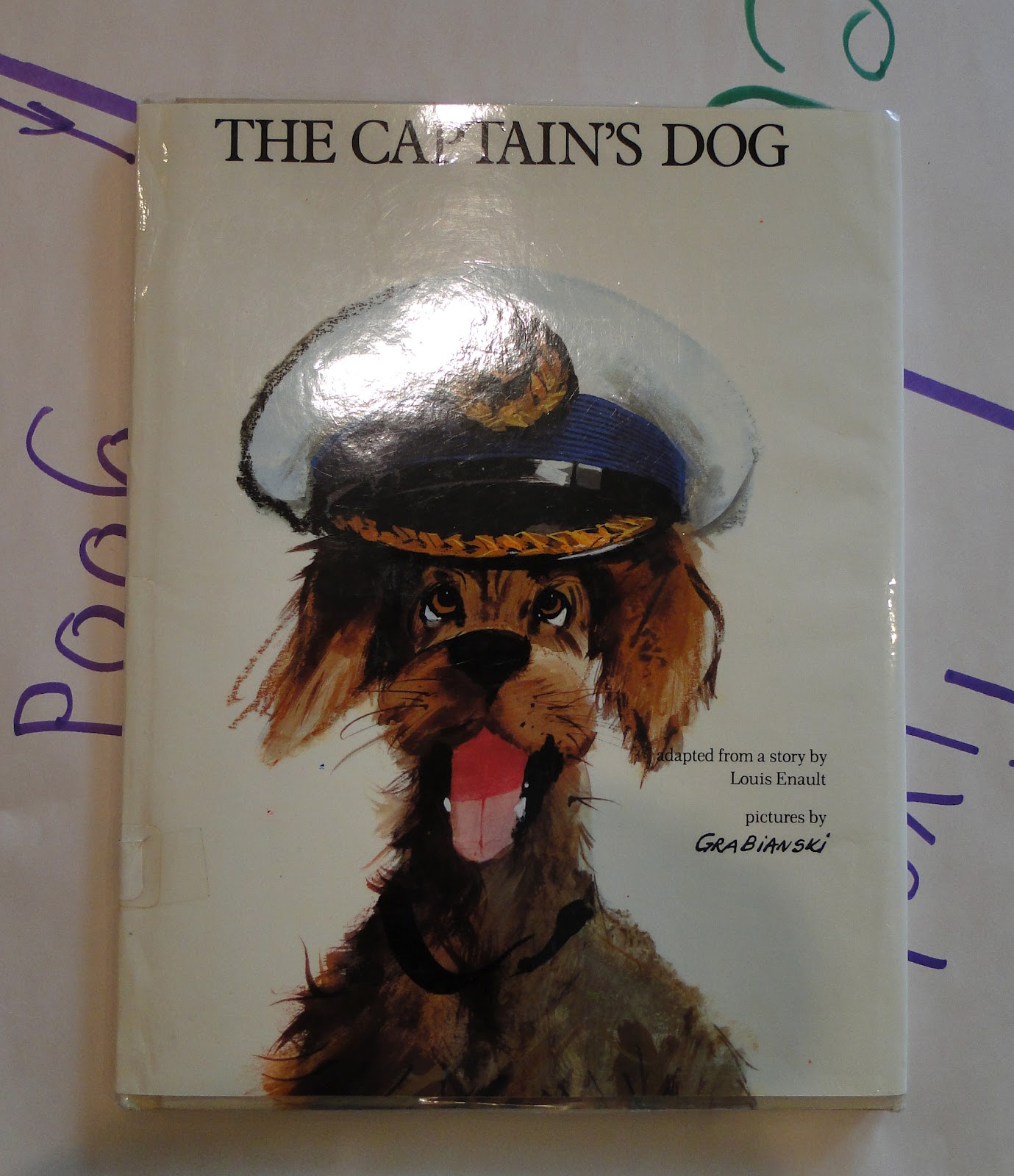
Grammar Voyage: the introduction.  Then a nostalgic voyage for me.  We read one of my childhood favorites: The Captain's Dog


Super is in charge of jotting down the adjectives and Dude records the verbs.  Until they get tired of it and just listen to the wonderful story.


 2:15 pm

Kids listen to Raptor Red while doing handwriting practice.


 2:30 pm

A snack and free reading time.


Wake up, Gomez, it's almost time for karate!

Other than the goodie bags, this is a pretty typical day for us.  We alternate between nature study, science, and history.  We do math, reading and language every day.  

Between karate, swimming, scouts and our homeschool group, there is usually something going on in the afternoon.  And Gomez always joins us for school!

Hope you had a great day, too!


Not Back to School Blog Hop